Second Craft: Bringing Handmade Warmth to Modern Design
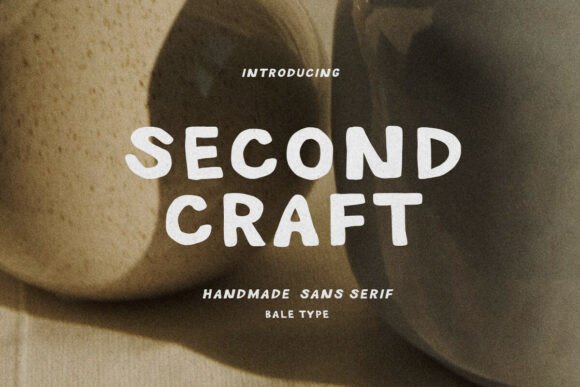
There's a certain authenticity that comes from something made by hand. In a world saturated with sleek, perfect digital lines, the slight imperfections and organic flow of a hand-drawn element can feel incredibly genuine. This is the exact feeling the Second Craft font captures. It's a bold, handmade sans-serif typeface that doesn't just display letters; it conveys personality, warmth, and a human touch. For designers, entrepreneurs, and creators, it offers a way to break through the digital noise with a visual voice that feels approachable and real.
More Than Just Letters: The Visual Appeal of a Hand-Drawn Typeface
At its core, Second Craft is a display font, meaning it's designed to make a statement. Its sans-serif foundation keeps it clean and modern, but the hand-drawn execution is where its magic lies. Each character has subtle variations in line weight and a gentle, natural curve that mimics the movement of a pen or brush. This isn't a sterile, geometric font; it has an organic vibe that feels crafted rather than generated. The result is a typeface that commands attention while simultaneously feeling friendly and accessible. It strikes a rare balance between being bold enough for headlines and possessing the nuanced character needed for more intimate applications.
This unique personality makes it incredibly versatile. It functions beautifully as a creative font for artistic projects, yet its legibility and structure give it the backbone required for commercial use. Whether you're designing a logo for a new coffee shop, creating social media graphics for a boutique, or laying out a wedding invitation, this font injects a dose of crafted sincerity. It’s a tool that helps translate the often-intangible feeling of "handmade" into a digital context, which is invaluable for brands and projects built on authenticity.
Practical Applications: Where Second Craft Truly Shines
Understanding a font's aesthetic is one thing; knowing how to apply it effectively is where the real value lies. Second Craft excels in scenarios where you want to connect with your audience on a personal level. Its applications span a wide range of creative and commercial projects:
- Brand Identity & Logos: For small businesses, especially those in artisanal food, boutique retail, wellness, or craft services, this font can form the cornerstone of a brand identity. It instantly communicates care, quality, and a hands-on approach. A logotype set in Second Craft feels like a signature, making a brand memorable from the first glance.
- Packaging Design: On product labels, boxes, and bags, the font’s texture adds a tactile quality that influences perception. It suggests the product inside is made with attention to detail, perfect for gourmet goods, cosmetics, or handmade crafts.
- Marketing & Social Media: In the fast-scroll world of Instagram or Pinterest, a handwritten font like this stops the thumb. It’s ideal for quotes, promotional graphics, and Instagram Stories where a personal, conversational tone is key. It helps content feel less like an ad and more like a note from a friend.
- Editorial & Web Design: Used for pull quotes, subheadings, or section titles on a blog or website, it can break up monotonous text and guide the reader’s eye. It adds visual interest to editorial layouts and digital publications, enhancing readability through variety.
- Print & Physical Goods: From posters and flyers to merchandise like t-shirts and tote bags, the font’s bold nature ensures it reproduces well. It’s also a beautiful choice for invitations, greeting cards, and menus, where setting a specific mood is essential.
The key is to use it strategically. It’s often most powerful as a headline or accent font, paired with a simpler, clean sans-serif or serif for body text to ensure overall readability. This pairing creates a dynamic contrast that feels both professional and thoughtfully designed.
Integrating Second Craft into Your Design Workflow
Adopting a new font into your toolkit involves more than just liking its look. To use Second Craft effectively and ensure it elevates your work, consider these practical steps.
First, always test it in context. Mock up your logo on a business card, place your headline on a website mockup, or see how it looks on a product package. This helps you assess its readability at different sizes and in various color combinations. A font that looks stunning at 72pt on your screen might need adjustments for a 12pt caption.
Next, explore font pairing. The character of Second Craft means it pairs best with fonts that don’t compete for attention. A simple, geometric sans-serif like Montserrat or a classic serif like Lora can provide a stable, readable foundation for paragraphs, allowing Second Craft’s personality to shine in headlines without overwhelming the design. Experiment with different combinations to see what aligns with your project’s goals—whether that’s a playful, rustic, or elegantly casual feel.
Also, take time to review the full character set and any included styles. Does it come with alternate characters, ligatures, or multiple weights? Knowing these details allows you to fine-tune your designs and add extra flair where needed, making the most of this premium font asset.
Finally, for any commercial project, verify the licensing. Ensure the font license covers your intended use, whether for client work, merchandise for sale, or digital products. Respecting licensing is a fundamental part of professional practice and supports the designers who create these valuable tools.
A Tool for Connection in a Digital Landscape
Ultimately, typography is about communication. The fonts we choose send subtle signals about tone, quality, and intent before a single word is read. Second Craft is a powerful signal for warmth, creativity, and authenticity. It’s not just another typeface in a library; it’s a design asset that can help shape perception, build brand recognition, and foster a deeper connection with your audience. In a marketplace crowded with generic visuals, embracing a font with this level of handcrafted character can be the detail that makes your project feel uniquely human and genuinely inviting.